🏝️ Cemagi, Bali
Quick links
- Where is Cemagi?
- What is Cemagi like?
- Things to do in Cemagi
- Cemagi Beach
- Cemagi weather
- Best time to visit Cemagi
- Is Cemagi the new Canggu?
- How to stay in Cemagi
Where is Cemagi?
Cemagi is located on the south west coast of Bali, just 20 mins drive to the north of Canggu and Pererenan and just south of Tanah Lot.
Getting to Cemagi from the airport
Cemagi is about a one-hour drive north of Ngurah Rai International Airport, but it can take longer depending on traffic.
The journey from the airport along Sunset Road and then up onto Raya Canggu can be gridlocked depending on the time of day. So bear that in mind when making plans, esepcially when planning to leave Cemagi and head back to the airport to catch your flight home.
With regards to transportation there is no real bus service between the airport and Cemagi so a taxi or private minibus is the only real option. Gojek is your best bet here and lets you easily book a ride without the hassle of having to haggle with taxi drivers.
If you are unable to download Gojek before your arrival then there are plenty of taxis waiting at arrivals - just make sure you agree a price upfront - it shouldn't cost any more than 400,000 IDR.
What is Cemagi like?
In a word - quiet! Very quiet. But that's the appeal for many people looking to escape the overcrowded neighbouring Canggu in search of a more authentic Balinese coastal location.
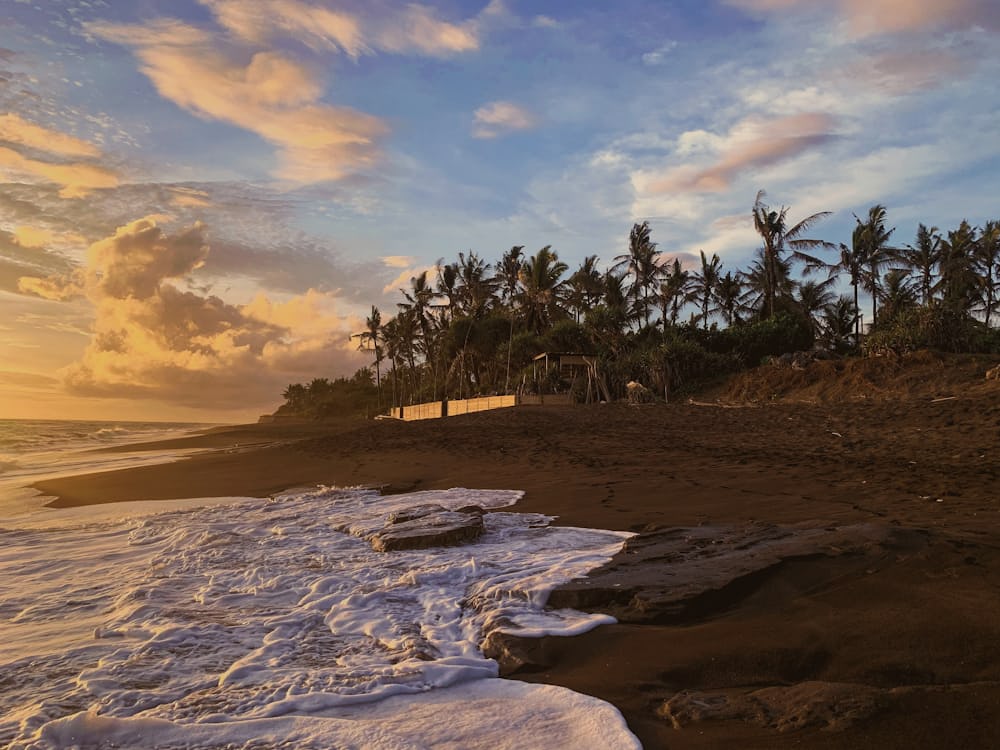
Cemagi is like stepping back in time 15 or 20 years; with sprawling green rice terraces, a quiet black sand beach and endless local shops, warungs, and villages. In contrast to Canggu which is a bustling hub of party goers, cafes, bars and restaurants (with prices to match).
Things to do in Cemagi
Although Cemagi is fairly quiet compared to some other places in Bali there is still plenty to do in this area. Tanah Lot is one of Bali's most iconic attractions and just a 15 minute drive away. The rocky cliff is home to Pura Tanah Lot, a small temple perched above the Indian Ocean. It's best to visit in the late afternoon to capture one of Bali's most breathtaking sunsets.
If it's nightlife you are after then Canggu is just a 20 min drive south and has a multitude of bars, restaurants and speakeasys.
Being just a 1 hour journey from Cemagi Ubud is also a popular destination with its famed Monkey Forest, sprawling rice terraces and laid back vibe.
Cemagi Beach
Cemagi boasts a black sand beach much like its southern neighbour Canggu. Bali is home to active volcanoes, and the black sands found in places like Cemagi, Canggu and Lovina are a result of regular volcanic activity across the island.
The beach is quiet compared to other beaches in this area and is an excellent spot for watching those famous Balinese sunsets.
Can you surf at Cemagi Beach?
Not really no. Or certainly not if you are an advanced surfer looking for something a little more challenging. Cemagi doesn't have the swells and waves that nearby Seminyak, Canggu and northern Kedungu do as the water here is much shallower and calm. That being said though, some of the most popular surf spots in Bali are literally just 10 mins or so down the coast. So Cemagi is still an excellent base from which to hit those surf spots should you wish.
Cemagi Weather
Like anywhere in Bali Cemagi is blessed with a tropical warm climate all year round. Temperatures only really fluctuate by a few degrees throughout the year; ranging from around 26 degrees to mid 30 degree celsius. This makes Cemagi (and Bali as a whole) a perfect sunny destination all year round.
The rainy season in Cemagi runs from around September through to February but don't be mislead by the name. Even during rainy season there are long hot sunny days with most showers happening for an hour or two in the late afternoon or evening.
Monthly Temperatures
Best time to visit Cemagi
The best time to visit Cemagi is typically during the dry season, which runs from April to September. During this period, you can expect less rainfall and hot sunny days, creating ideal conditions for outdoor activities like visiting the beach or exploring local attractions.
And the worst?
On the other hand, the worst time to visit Cemagi would probably be during the wet season, which occurs from October through to February. This period experiences heavier rainfall and increased humidity, which can lead to flooding and limited outdoor activities. Additionally, the wet season may also bring about rough seas and less-than-ideal beach conditions. Therefore, if you're planning a trip to Cemagi, it's best to aim for the dry season to make the most of your visit.
Is Cemagi the new Canggu?
Maybe. But not quite yet. There is undoubtedly a lot of development going on with villas being built on almost every street. Every week we also hear of new restaurants and bars either under construction or looking into the options of opening a place in Cemagi. Given the location and similarities to Canggu it's no surprise. Property and land in the area is still significantly cheaper than its more developed neighbour. But for how long?
As more travelers become aware of the beauty and charm of Cemagi, the town will undoubtedly become more popular and attract more visitors. This will lead to the development of even more tourist facilities and amenities, making it an even more attractive destination for travelers. And so the cycle continues - much like Canggu.
Therefore, in my opinion, it's important for the local authorities and community to carefully manage the growth of tourism in Cemagi to ensure that it does not have negative impacts on the town and its residents.
And we don't simply end up with Canggu V2...
How to stay in Cemagi
Indonesia has some great options available to digital nomads who are looking to stay here long term.
VOA
Visa on arrival (or VOA) is available to a host of nationalities and allows holders to stay in Indonesia for up to 30 days which can be extended a further 30 days giving a total of up to 60 days stay.
It's simple to apply online and costs around $35. The visa is usually issued automatically within a few hours of applying and the extension can also be done online making it super convienient.
Longer Stays
If you wish to stay in Cemagi (or Indonesia) longer than 60 days then it may be better to look into other visa options such as the B211 visa or the D2 multi entry visa.
The B211 allows you to stay in Indonesia for up to 6 months (60 days stay extendable twice for 60 days each giving a total of 180 days) but is single entry. So if you wish to travel and leave Indonesia the visa will be cancelled and you will need to apply for a new one to return.
The D2 is a multi entry visa and is valid for 12 months. This visa allows you to stay for up to 6 months per visit (60 day stay extendable twice for 60 days each giving a total of 180 days) but is multi-entry - meaning if you leave Indonesia you can come back in on the same visa simply starting a 60 day stay afresh (which can then also be extended twice).
Overstaying your visa
It's important you do not overstay your visa when in Indonesia. Doing so will result in a 1,000,000 IDR per day fine (around $60) which can make for an expensive mistake. Long overstays can also be blacklisted and stopped from entering Indonesia again so it's important to ensure you remain compliant.
Simple tools like this visa expiry calculator can make it easier to keep track of those all important departure dates.